How to Use a
Defibrillator
Anyone can use a defibrillator — no training is required. AEDs are designed to guide you through every step with clear spoken instructions.
What is a Defibrillator?
An Automated External Defibrillator (AED) is a portable, life-saving device that delivers an electric shock to the heart during a cardiac arrest. The shock can restore a normal heart rhythm and dramatically increase the chances of survival.
Cardiac arrest can happen to anyone, at any age, at any time. When the heart stops pumping effectively, brain damage can begin within just 4–6 minutes. Every minute without treatment reduces the chance of survival by approximately 10%. A defibrillator used within the first few minutes — alongside CPR — can more than double survival rates.
Modern AEDs are designed to be used by the public with no prior training. They analyse the heart's rhythm automatically and only deliver a shock when it is needed — you cannot accidentally hurt someone with an AED.
Step-by-Step Emergency Guide
Follow these steps in order if someone collapses and is unresponsive.
Call 999 immediately
Call 999 (or ask someone else to) before doing anything else. Tell them the exact location and that someone has collapsed and is unresponsive.
Check for responsiveness
Tap the person's shoulders firmly and shout "Are you OK?" Check if they are breathing normally. If they are unresponsive and not breathing normally, start CPR immediately.
Start CPR
Place the heel of your hand on the centre of their chest. Push down hard and fast — at least 5–6 cm deep, 100–120 times per minute (to the beat of "Stayin' Alive"). After every 30 compressions, give 2 rescue breaths if you are trained to do so.
Get the defibrillator
Send someone to retrieve the nearest defibrillator. Use the IoW Defibrillator Map to find your nearest one. Do not stop CPR while waiting — keep going until the AED arrives.
Switch on the AED
Open the case and switch the defibrillator on. It will give you clear spoken instructions — follow them calmly. Every AED guides you through the process automatically.
Attach the pads
Remove or cut away clothing from the chest. Peel the backing off the pads and attach them as shown in the diagram on the pads — one below the right collarbone, one to the left side below the armpit.
Let the AED analyse
The AED will analyse the heart rhythm. Stand clear and ensure nobody is touching the patient. If a shock is needed, the machine will charge automatically.
Deliver the shock (if advised)
Shout "Stand clear!" and ensure nobody is touching the patient. Press the flashing shock button when prompted. Immediately resume CPR for 2 minutes before the AED re-analyses.
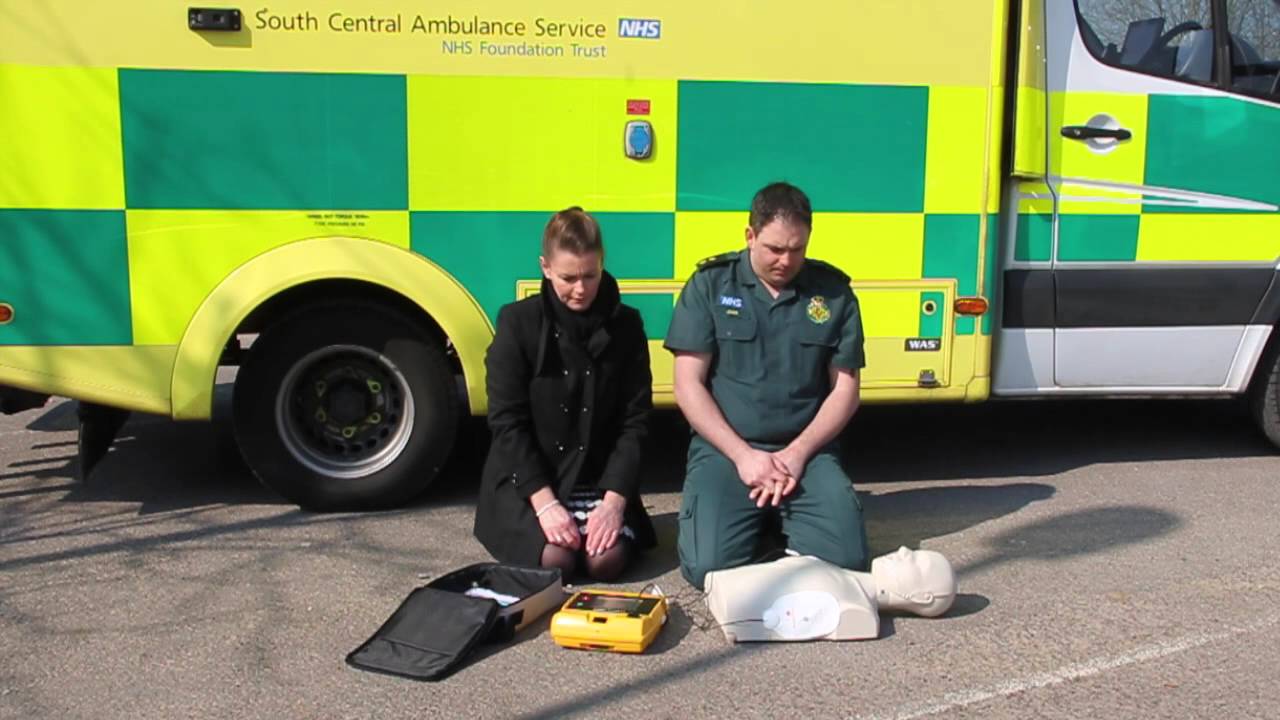
Watch: How to Use a Defibrillator
A short video guide to help you feel confident in an emergency.
CPR Quick Reference
CPR keeps blood flowing to the brain until the defibrillator or paramedics arrive.
Compression rate
100–120 per minute
Compression depth
5–6 cm
Hand position
Centre of the chest
Compression : breath ratio
30 : 2 (if trained)
Hands-only CPR
If untrained, continuous compressions only — no breaths
Hands-Only CPR
If you have not been trained in rescue breaths, hands-only CPR is just as effective for the first few minutes. Push hard and fast in the centre of the chest and do not stop until the AED or paramedics take over. A good rhythm to follow is the beat of "Stayin' Alive" by the Bee Gees (100–120 bpm).
Important Things to Know
You cannot harm someone
An AED will only deliver a shock if it detects a shockable heart rhythm. It will not shock someone who does not need it. You cannot make things worse by using one.
It talks you through everything
Every AED provides clear spoken instructions. Just turn it on and follow the voice prompts. There is nothing to memorise.
Keep going until help arrives
Continue CPR and follow AED prompts until paramedics arrive and take over. Do not stop even if the person shows no sign of response.
You are legally protected
Good Samaritans who attempt CPR or use an AED in good faith are legally protected in the UK. There is no legal reason to hesitate.
Find Your Nearest Defibrillator
Knowing where your nearest AED is before an emergency can save precious minutes. Use our interactive map to locate defibrillators across the Isle of Wight.